Zero Liquid Discharge (ZLD) System – Industrial Wastewater Recycling Solutions
Introduction
Water scarcity, strict environmental regulations, and increasing industrial wastewater generation have made sustainable water management a priority for industries worldwide. Traditional wastewater treatment systems can reduce pollution, but they may still generate liquid waste that requires disposal.
A Zero Liquid Discharge (ZLD) System is an advanced wastewater treatment solution designed to eliminate routine liquid discharge from industrial processes by recovering water and converting concentrated dissolved solids into reusable or appropriately disposable forms.
Industries implementing ZLD technology can achieve:
- High Water Recovery
- Reduced Environmental Impact
- Support for Regulatory Compliance
- Sustainable Wastewater Management
ZLD systems are widely used in industries such as pharmaceuticals, chemicals, textiles, power plants, food processing, and manufacturing, particularly where wastewater contains high concentrations of dissolved solids and requires advanced treatment.
What is a Zero Liquid Discharge (ZLD) System?
A Zero Liquid Discharge (ZLD) System is a wastewater treatment process designed to eliminate liquid waste discharge by treating wastewater, recovering reusable water, and concentrating the remaining dissolved contaminants into a solid residue.
Unlike conventional wastewater treatment systems, ZLD plants focus on:
- Recovering Maximum Practicable Water
- Concentrating Dissolved Salts
- Recovering Valuable By-Products Where Feasible
- Eliminating Routine Liquid Waste Discharge
The final outputs of a ZLD plant generally include:
- Recovered Water for Suitable Reuse Applications
- Solid Residue or Crystallized Salts for Recovery or Appropriate Disposal
ZLD technology provides an advanced solution for industries seeking extensive wastewater recycling and the elimination of routine liquid discharge.
Why Do Industries Need ZLD Systems?
Industrial wastewater can contain high levels of dissolved solids, chemicals, salts, heavy metals, and organic pollutants. Discharging inadequately treated wastewater can negatively affect the environment and water resources.
1. Environmental Protection
ZLD systems prevent routine liquid wastewater discharge from the treatment process when properly designed and operated. This helps reduce the risk of soil, groundwater, and surface water contamination.
2. Water Conservation
Industries can recover and reuse treated water, reducing dependence on freshwater sources and improving overall water-use efficiency.
3. Regulatory Compliance
Industries operating in water-intensive sectors may require advanced wastewater management systems to meet applicable environmental standards and discharge requirements. ZLD can help meet these requirements where it is mandated or selected.
4. Resource Recovery
ZLD technology can support the recovery of:
- Process Water
- Salts, Where Recovery Is Feasible
- Valuable Dissolved Materials, Depending on Wastewater Composition
How Does a Zero Liquid Discharge System Work?
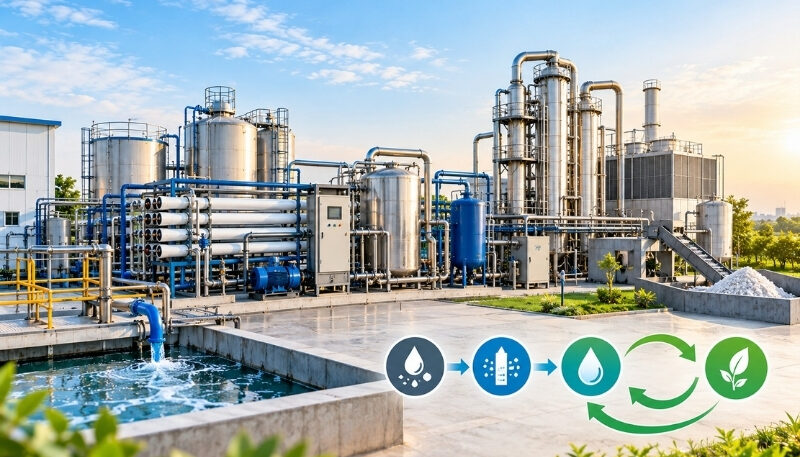
A ZLD Plant uses multiple treatment stages to separate reusable water from dissolved contaminants and manage the remaining concentrated waste.
The exact process depends on wastewater characteristics, recovery targets, scaling potential, energy availability, and the required quality of recovered water.
1. Pre-Treatment Process
The first stage prepares wastewater for advanced treatment by removing contaminants that could affect downstream equipment and membrane performance.
Pre-treatment may remove or reduce:
- Suspended Solids
- Oil and Grease
- Organic Impurities
- Scale-Forming Compounds
Common pre-treatment processes include:
- Filtration
- Chemical Treatment
- Clarification
- pH Adjustment
- Water Softening, Where Required
Effective pre-treatment helps protect downstream systems and improves the overall performance of the ZLD plant.
2. Reverse Osmosis (RO) System
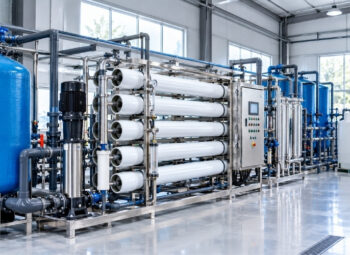
Reverse Osmosis is an important stage in many ZLD systems. It uses pressure to force water through semipermeable membranes while rejecting a significant proportion of dissolved salts and other contaminants.
The RO process helps to:
- Recover Reusable Water
- Concentrate Dissolved Salts
- Reduce the Volume of Wastewater Sent to Evaporation
- Lower the Load on Downstream Evaporators
RO recovery depends on feedwater quality, operating pressure, membrane characteristics, and scaling or fouling limitations. Additional treatment may be required to meet the intended reuse water quality.
3. Evaporation Process
After membrane treatment, the concentrated wastewater may enter an evaporation system to recover additional water and further concentrate the remaining dissolved solids.
Multi Effect Evaporator (MEE)
A Multi Effect Evaporator (MEE) is commonly used in ZLD plants to concentrate wastewater through multiple evaporation stages. Vapour generated in one stage can provide heat for another stage, improving thermal energy utilization.
An MEE system typically:
- Removes Water Through Evaporation
- Concentrates Dissolved Solids
- Produces Condensate for Suitable Reuse After Quality Verification
- Reduces the Volume of Concentrated Waste
The overall energy requirement depends on the wastewater characteristics, evaporator configuration, operating conditions, and heat recovery arrangements.
4. Crystallization Process
Crystallization is used when the remaining concentrated wastewater must be converted into solid form to achieve the ZLD objective.
A crystallizer may:
- Promote Salt Crystallization
- Separate Crystals from the Remaining Liquid
- Reduce the Volume of Liquid Residue
- Produce Solid Material for Recovery or Appropriate Disposal
Additional drying may be required depending on the crystallizer design and the moisture content of the resulting solids. Solid residues must be characterized and handled according to applicable requirements.
Components of a ZLD Plant
A complete Zero Liquid Discharge System may include several components selected according to the treatment process and wastewater characteristics.
1. Feed Tank
The feed tank stores wastewater before treatment and helps maintain a consistent supply to downstream treatment equipment.
2. Chemical Dosing System
Chemical dosing systems add selected chemicals for pH adjustment, coagulation, scale control, and other treatment requirements.
3. RO System
The Reverse Osmosis system separates a portion of the water from dissolved salts and concentrates the remaining wastewater.
4. Multi Effect Evaporator (MEE)
The MEE concentrates wastewater through evaporation and recovers condensate for further evaluation and potential reuse.
5. Crystallizer
The crystallizer converts highly concentrated dissolved salts into solid crystals that can be separated for recovery or appropriate disposal.
6. Sludge and Solid Waste Management System
This system manages sludge and solid residues generated during treatment through suitable collection, dewatering, storage, recovery, and disposal procedures.
Technologies Used in Zero Liquid Discharge Systems
Reverse Osmosis (RO)
RO technology recovers water from wastewater while concentrating dissolved salts and other rejected contaminants.
Ultrafiltration (UF)
Ultrafiltration removes suspended particles, colloids, and other larger impurities. It is often used as a pre-treatment stage to protect downstream membrane systems.
Multi Effect Evaporator (MEE)
MEE technology concentrates wastewater through multiple evaporation stages and improves thermal energy utilization.
Mechanical Vapour Recompression (MVR)
Mechanical Vapour Recompression technology compresses generated vapour so that its heat can be reused in the evaporation process. It can reduce external energy demand in suitable applications, depending on system design.
Crystallization Technology
Crystallization converts concentrated dissolved salts into solid crystals, supporting the final stages of wastewater volume reduction and liquid discharge elimination.
Applications of ZLD Systems
1. Pharmaceutical Industry
Pharmaceutical industries generate wastewater containing chemicals, solvents, active ingredients, and other process-related contaminants. ZLD systems can support water recovery and wastewater management when designed for the specific wastewater composition.
2. Chemical Industry
Chemical manufacturing can generate complex wastewater streams with high total dissolved solids (TDS), salts, and process chemicals. ZLD plants help manage these streams through customized treatment and concentration processes.
3. Textile Industry
Textile wastewater may contain:
- Dyes
- Salts
- Chemical Residues
- Organic Pollutants
ZLD technology helps recover water from suitable wastewater streams and reduces routine liquid discharge.
4. Power Plants
Power generation facilities consume significant quantities of water and may generate wastewater containing dissolved solids, treatment chemicals, and other process contaminants. ZLD systems can help recover water and manage concentrated residues.
5. Food Processing Industry
Food processing industries can consider ZLD solutions for wastewater recovery and reuse, depending on the organic load, dissolved solids, treatment requirements, and economic feasibility.
Benefits of Zero Liquid Discharge Systems
1. Elimination of Routine Liquid Waste Discharge
Properly designed and operated ZLD systems eliminate routine liquid discharge from the treatment process by recovering water and managing the remaining contaminants as concentrated waste or solids.
2. Maximum Practicable Water Recovery
ZLD systems combine membrane treatment, evaporation, and crystallization where required to maximize water recovery according to process limitations.
3. Reduced Environmental Impact
Eliminating routine liquid discharge helps reduce the risk of contamination associated with industrial wastewater disposal.
4. Improved Sustainability
Water recovery and reuse support environmentally responsible industrial operations and improve water resource management.
5. Better Regulatory Compliance
ZLD systems can help industries meet applicable wastewater management requirements where zero liquid discharge is mandated or adopted.
6. Reduced Freshwater Consumption
Recovered water can reduce dependence on external freshwater sources when its quality is suitable for the intended industrial application.
Factors Affecting ZLD Plant Cost
The cost of a ZLD plant depends on wastewater characteristics, required recovery levels, treatment capacity, technology selection, energy consumption, and installation requirements.
1. Wastewater Characteristics
The chemical composition, TDS concentration, scaling potential, organic content, and presence of specific contaminants influence the treatment process and equipment requirements.
2. Plant Capacity
Higher wastewater flow rates generally require larger treatment equipment and greater processing capacity, affecting the overall project investment.
3. Technology Selection
The overall cost depends on the selected treatment technologies, including:
- Reverse Osmosis (RO) System
- Multi Effect Evaporator (MEE)
- Mechanical Vapour Recompression (MVR)
- Crystallizer
- Pre-Treatment and Filtration Systems
4. Energy Requirements
Evaporation and crystallization can require substantial energy. Heat recovery, energy-efficient equipment, and process optimization are important considerations when evaluating operating costs.
5. Automation Level
Automated monitoring and control systems can increase initial investment but may improve process control, operating consistency, and system monitoring.
ZLD System vs Conventional Wastewater Treatment
Conventional wastewater treatment and Zero Liquid Discharge systems differ in their water recovery objectives and management of residual waste.
| Feature | Conventional Treatment | ZLD System |
|---|---|---|
| Water Recovery | Depends on treatment configuration | Designed for maximum practicable recovery |
| Liquid Discharge | May allow treated water discharge | Designed to eliminate routine liquid discharge |
| Salt Management | Depends on the selected process | Concentrates salts for recovery or disposal |
| Resource Recovery | Depends on system design | Can recover water and selected materials |
| Energy Requirements | Depend on treatment technology | Can be higher due to evaporation and crystallization |
| Typical Applications | General wastewater treatment | Industrial wastewater requiring zero liquid discharge |
Why Choose APK Aquatech for ZLD Solutions?
Implementing a successful Zero Liquid Discharge System requires appropriate engineering, technology selection, and customized process design based on the wastewater characteristics and recovery objectives.
APK Aquatech provides customized wastewater treatment solutions designed according to:
- Industrial Wastewater Characteristics
- Water Recovery Requirements
- Applicable Regulatory Standards
- Plant Capacity and Site Conditions
- Energy Efficiency and Operational Goals
- Water Recycling and Residue Management Requirements
With suitable wastewater recycling technologies and engineered solutions, APK Aquatech helps industries improve water recovery, manage concentrated waste streams, and work towards sustainable industrial water management through customized ZLD solutions.